
Lithium-ion and LiFePO4 batteries both have "lithium" in the name, but they're not the same thing. They're built with different materials, they perform differently, and they're made for different jobs. If you've been going back and forth between the two, this guide breaks down every major difference so you know exactly which one fits your situation.
What Are Lithium-Ion and LiFePO4 Batteries?
"Lithium-ion" is actually a broad label. It covers a whole family of rechargeable battery chemistries that move lithium ions between a cathode and an anode to store and release energy. The most common types are lithium cobalt oxide (LiCoO₂), lithium manganese oxide (LiMn₂O₄), and lithium nickel manganese cobalt oxide (NMC). These are the cells inside your smartphone, laptop, power tools, electric scooters, and most electric vehicles. They're everywhere because they pack a lot of energy into a small, lightweight package. At Voniko, we work with several lithium chemistries across our disposable lithium battery lineup, so we see firsthand how different formulations behave in real-world devices. When most people say "lithium-ion battery," they're usually talking about NMC or lithium cobalt oxide cells — and that's the version we'll use as the comparison point throughout this article.

LiFePO4 stands for lithium iron phosphate. It is technically a type of lithium-ion battery, but it uses iron phosphate (FePO₄) as the cathode material instead of cobalt or nickel. That single change in chemistry gives LiFePO4 batteries a completely different set of strengths. They're more thermally stable, they survive far more charge cycles, and they're safer under stress. The trade-off is that they store less energy per kilogram compared to standard lithium-ion cells. You'll find LiFePO4 batteries in solar energy storage systems, RVs, marine electronics, golf carts, and commercial backup power setups. These batteries are designed for the long haul — built to cycle daily for years without significant degradation.
So here's the simple version: all LiFePO4 batteries are lithium-ion, but not all lithium-ion batteries are LiFePO4. The differences trace back to the cathode material, and that one difference ripples outward to affect energy density, lifespan, safety, cost, and the types of devices each battery works best in. Whether you're powering high-drain gadgets like gaming controllers and digital cameras or planning a home solar storage system, knowing these differences keeps you from spending money on the wrong chemistry.
Energy Density, Cycle Life, and Performance
Energy density is where standard lithium-ion batteries pull ahead. NMC and lithium cobalt oxide cells typically deliver between 150–250 Wh/kg (watt-hours per kilogram), while LiFePO4 batteries sit in the 90–160 Wh/kg range. In plain terms, for the same weight, a standard lithium-ion battery stores noticeably more energy. This is exactly why phones, laptops, drones, e-bikes, and most EVs lean on NMC chemistry — they need the longest possible runtime in the lightest, most compact package. If weight and size are your top priorities, lithium-ion has a clear advantage.
But cycle life is where LiFePO4 takes over completely. A typical NMC lithium-ion battery will give you somewhere between 500 and 1,000 full charge-discharge cycles before its capacity drops below 80% of the original rating. LiFePO4? You're looking at 2,000 to 5,000+ cycles under the same conditions. That's not a small gap — it means a LiFePO4 battery can outlast an NMC pack by three to five times or more. LiFePO4 batteries also handle deep discharges better. You can regularly drain a LiFePO4 cell down to 80–100% depth of discharge (DoD) without wrecking its long-term health, while NMC cells degrade faster if you consistently push past 80% DoD. On top of that, LiFePO4 has a flatter voltage curve during discharge, which means your devices receive steady, stable power from a full charge right down to near-empty. NMC cells tend to show a more sloping voltage drop, which can cause performance dips as the battery drains.
Here's a side-by-side look at the specs that matter most when comparing these two battery types:
| Feature | Lithium-Ion (NMC) | LiFePO4 |
|---|---|---|
| Energy Density | 150–250 Wh/kg | 90–160 Wh/kg |
| Nominal Voltage | 3.6–3.7V per cell | 3.2V per cell |
| Cycle Life | 500–1,000 cycles | 2,000–5,000+ cycles |
| Depth of Discharge | 80–90% | 80–100% |
| Weight (same capacity) | Lighter | Heavier |
| Thermal Runaway Onset | ~150°C (302°F) | ~270°C (518°F) |
| Self-Discharge Rate | ~2–3%/month | ~1–3%/month |
| Typical Lifespan | 2–5 years | 5–10+ years |
The numbers lay it out clearly. Lithium-ion wins on energy density and weight. LiFePO4 wins on cycle life, longevity, and deep discharge tolerance. Which set of numbers matters more depends entirely on what you're building or powering.
Safety and Thermal Stability
Safety is one of the biggest reasons people pick LiFePO4 over standard lithium-ion. The iron phosphate cathode is inherently more stable than the cobalt or nickel-based cathodes found in NMC cells. Standard lithium-ion batteries carry a higher risk of thermal runaway — a dangerous chain reaction where the cell overheats, releases flammable gases, and can catch fire or even explode under the right (or wrong) conditions. This is behind the news stories you've seen about hoverboards, e-bikes, laptops, and portable chargers going up in flames. Those incidents almost always involve NMC or lithium cobalt oxide cells, not LiFePO4.

LiFePO4 batteries resist thermal runaway because the phosphate-based cathode holds together at much higher temperatures. The onset of thermal decomposition in a LiFePO4 cell is around 270°C (518°F), while NMC cathodes start breaking down at roughly 150°C (302°F). That's a massive margin. Even under abuse conditions — overcharging, short-circuiting, puncturing the cell — LiFePO4 batteries are far less likely to ignite. They also don't release oxygen during decomposition the way cobalt-based cathodes do, which removes one of the key ingredients that fuels battery fires. This is why LiFePO4 is the default choice for indoor energy storage, marine applications, medical equipment, and any setup where a battery fire could have serious consequences.
Both battery types can be used safely when paired with a proper battery management system (BMS). A BMS monitors voltage, temperature, and current flow across cells to prevent overcharging, over-discharging, and short circuits. The difference is the built-in safety margin. LiFePO4 gives you a wide cushion at the chemistry level — even if the BMS fails or malfunctions, the battery itself is resistant to catastrophic failure. With NMC lithium-ion, the BMS carries more of the safety burden. For DIY solar builders, RV owners, and anyone putting batteries in enclosed or hard-to-monitor spaces, that extra chemical-level safety buffer makes LiFePO4 the smarter option.
Cost: Upfront vs. Lifetime Value
Let's talk price, because this is where most people hit a wall. LiFePO4 batteries cost more upfront — typically 20–40% more than NMC lithium-ion packs at the same capacity. If you're shopping for a 100Ah 12V battery, a LiFePO4 version might run $300–$500 while an NMC equivalent could sit at $200–$350. That gap is real, and it's the main reason standard lithium-ion still dominates in consumer electronics and lower-budget applications. When you're comparing sticker prices on a shelf, NMC looks like the better deal every time.
But sticker price isn't the whole picture. LiFePO4 batteries deliver 2,000 to 5,000+ charge cycles, while NMC batteries typically max out around 500–1,000. If you're cycling the battery daily — solar storage, RV house battery, off-grid cabin — a LiFePO4 pack could easily last 8–10+ years before it needs replacing. An NMC pack in the same application might tap out in 3–5 years. When you break down the cost per cycle, the math flips. A $400 LiFePO4 battery lasting 3,000 cycles works out to about $0.13 per cycle. A $250 NMC battery lasting 800 cycles comes in at roughly $0.31 per cycle. Over the life of the system, you spend less with LiFePO4 — even though you paid more on day one. That's the same "cost per hour" logic we talk about when comparing alkaline vs. heavy duty batteries for everyday devices. The cheaper product upfront is often the more expensive choice over time.
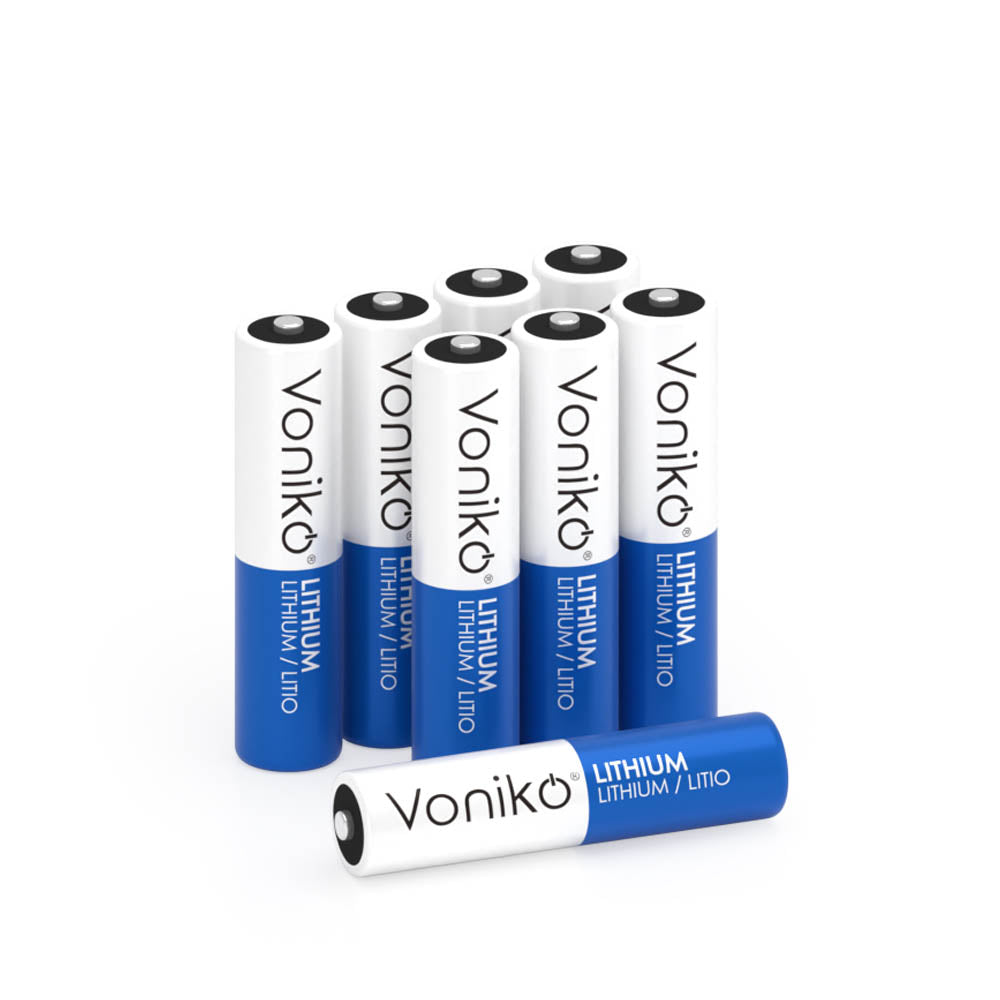
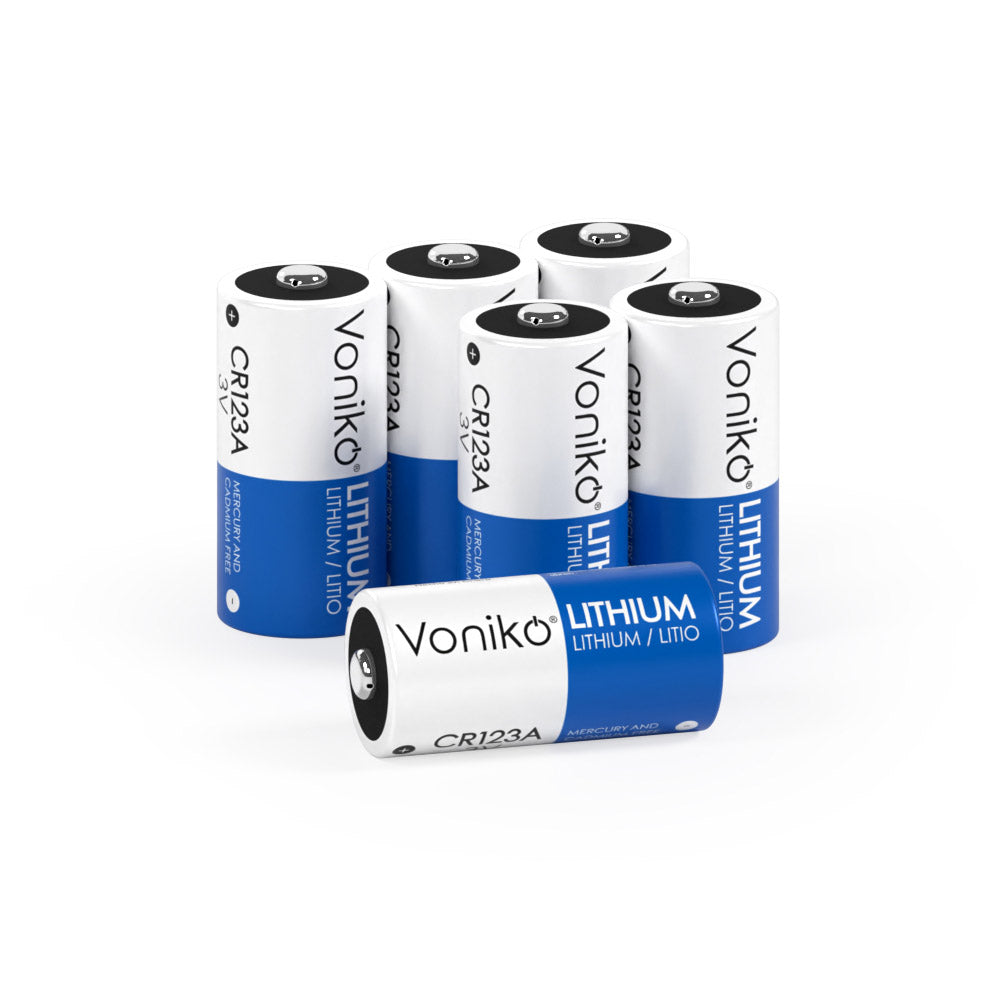
For regular consumer devices — flashlights, digital cameras, smart door locks, gaming controllers, wireless keyboards — the lithium-ion vs. LiFePO4 debate doesn't really apply. These gadgets use small disposable or rechargeable cells, not large battery packs. Your TV remote doesn't need a LiFePO4 cell. It needs a reliable AA or AAA battery that delivers steady voltage and long shelf life. That's where quality disposable lithium and alkaline cells come in, and it's exactly what we build at Voniko. We focus on the batteries that power your daily life — AA, AAA, CR123A, 9V, and coin cells — because those are what most people actually need week to week.
Which Battery Is Right for You?
Standard lithium-ion (NMC) batteries are the right fit when you need maximum energy in the smallest, lightest package. Smartphones, laptops, tablets, drones, e-bikes, power tools, and most electric vehicles all rely on NMC chemistry for this exact reason. If the device needs to be portable and run for hours on a single charge without weighing you down, lithium-ion delivers. It also makes sense for applications where you won't be cycling the battery thousands of times — gadgets you'll replace or upgrade in a few years anyway. The higher energy density means longer runtime per charge, which is the number-one priority for most portable electronics.

LiFePO4 is the better pick for stationary and semi-stationary setups where the battery will cycle daily for years. Home solar energy storage, off-grid power systems, RV house batteries, marine trolling motors, golf cart batteries, and commercial backup power all benefit from LiFePO4's long cycle life, deep discharge capability, and thermal stability. If the battery is going to sit in one spot and work hard day after day, LiFePO4 pays for itself many times over. It's also the go-to chemistry when safety is non-negotiable — enclosed spaces, indoor installations, anywhere near children, and any setup where monitoring the battery 24/7 isn't realistic.
For most of us at home, the practical battery question isn't actually "lithium-ion or LiFePO4." It's "which AA, AAA, or coin cell battery gives me the best performance in my everyday devices?" Gaming controllers, digital cameras, smart locks, flashlights, wireless speakers, and TV remotes — these are the gadgets eating through batteries in your house right now. And for those devices, you want premium alkaline or disposable lithium cells that deliver consistent voltage, long shelf life, and leak-proof protection. That's what we do at Voniko. Our full range of alkaline and lithium batteries is built to handle everything from low-drain wall clocks to high-drain motorized toys and camera flash units. Whatever your devices demand, we've got a battery that matches.
FAQs
Can I replace a lithium-ion battery with LiFePO4?
In many setups, yes — but it's not a direct drop-in swap. LiFePO4 cells have a lower nominal voltage (3.2V vs. 3.6–3.7V for NMC), so the total pack voltage will differ. You'll need a compatible charge controller or charger that supports LiFePO4 voltage profiles. For large systems like solar storage or RVs, this switch is common and manageable with the right equipment. For small consumer electronics like phones or laptops, it's generally not practical because the devices are engineered around specific voltage and form factor requirements.
Is LiFePO4 safer than lithium-ion?
Yes, and it's not close. LiFePO4's iron phosphate cathode stays stable up to around 270°C, compared to roughly 150°C for NMC cathodes. That makes LiFePO4 far more resistant to thermal runaway, fire, and explosion — even if the cell is overcharged, punctured, or short-circuited. LiFePO4 also doesn't release oxygen during decomposition, which removes a key fire accelerant. For indoor use, enclosed installations, and applications where safety margin matters, LiFePO4 is the clear winner.
How long does a LiFePO4 battery last compared to lithium-ion?
A quality LiFePO4 battery delivers 2,000 to 5,000+ charge cycles at 80% depth of discharge before its capacity drops below 80% of its original rating. In daily-cycling applications like solar storage, that translates to 5–10+ years of reliable use. Standard NMC lithium-ion batteries typically last 500–1,000 cycles under similar conditions, giving them a practical lifespan of 2–5 years. The difference in longevity is one of the biggest reasons people choose LiFePO4 for long-term installations.
Which is better for solar storage: lithium-ion or LiFePO4?
LiFePO4 wins for solar storage in almost every scenario. Its longer cycle life means fewer replacements over the life of your solar system. Its ability to handle deep discharges without accelerated degradation means you can use more of the stored energy each day. And its thermal stability reduces fire risk in indoor or garage-mounted installations. While NMC lithium-ion batteries offer higher energy density, the shorter lifespan and higher long-term replacement costs make them a worse deal for daily-cycling solar setups. Most solar installers now recommend LiFePO4 as the standard.
Why is LiFePO4 more expensive upfront?
LiFePO4 cells cost more to manufacture because the iron phosphate cathode requires different production processes, and the lower energy density means you need more cell material to hit the same capacity. The raw materials themselves (iron, phosphate) are actually cheaper and more abundant than the cobalt and nickel used in NMC cells, but the overall pack cost is still higher at the same kWh rating. The upside is that the cost per cycle is lower, so LiFePO4 pays for the premium within a few years of regular use.