
When your watch stops ticking or your car key fob goes dead, you're dealing with a coin cell battery. These tiny power sources keep our favorite gadgets running, but picking the right one can feel like reading a secret code. We're here to break down everything you need to know about coin cell battery types so you can keep your devices powered up without the guesswork.
These small, round batteries come in way more varieties than most people realize. From the common CR2032 in your computer motherboard to the LR44 in your kid's toy, each type has its own chemistry, voltage, and best use case. Let's walk through the different types, what makes them tick, and how to pick the perfect match for your needs.
What Are Coin Cell Batteries?
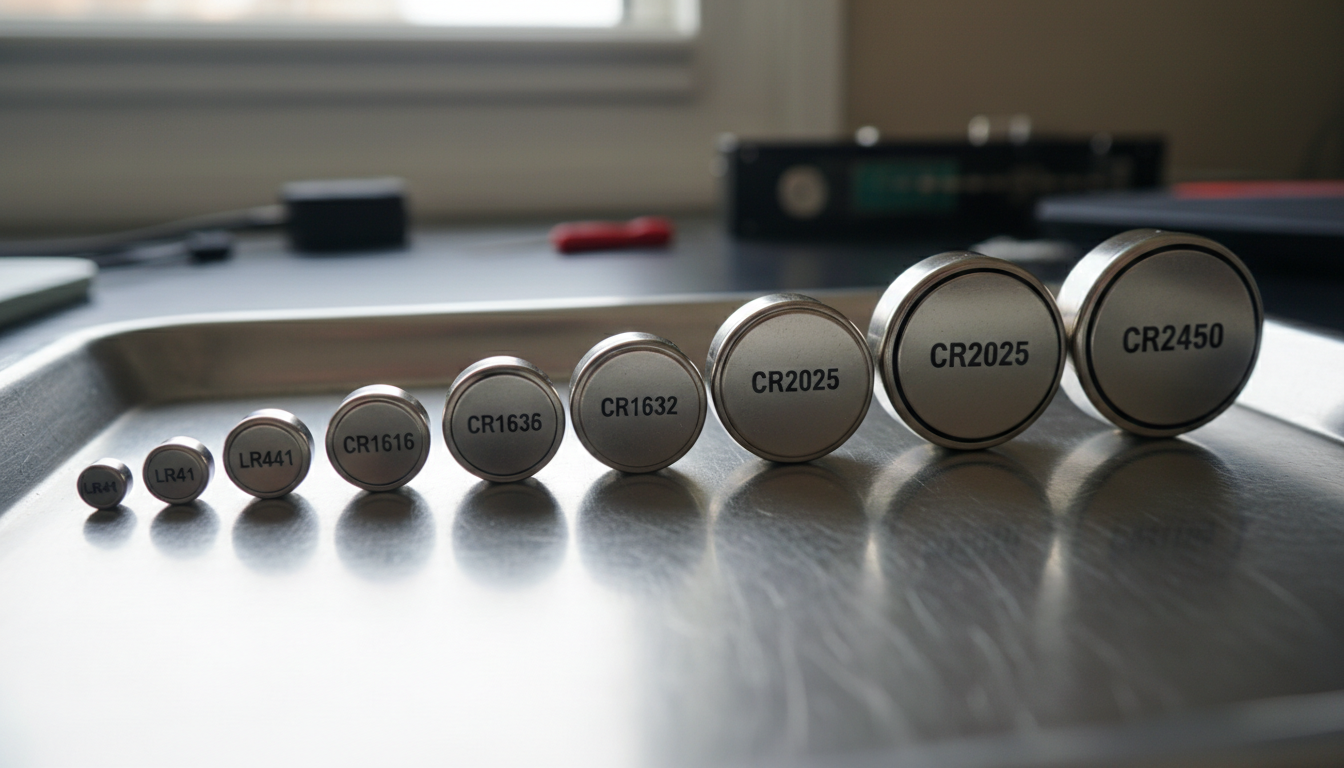
Coin cell batteries are small batteries made of a single electrochemical cell and shaped as a squat cylinder typically 5 to 25 mm in diameter and 1 to 6 mm high – resembling a button or coin. We often use the terms "coin cell" and "button cell" interchangeably, though coin cells are typically larger and thinner compared to button cells.
Stainless steel usually forms the bottom body and positive terminal of the cell; insulated from it, the metallic top cap forms the negative terminal. This simple construction makes them reliable and affordable to produce. These batteries power small portable electronic devices such as wrist watches, pocket calculators, and remote key fobs.
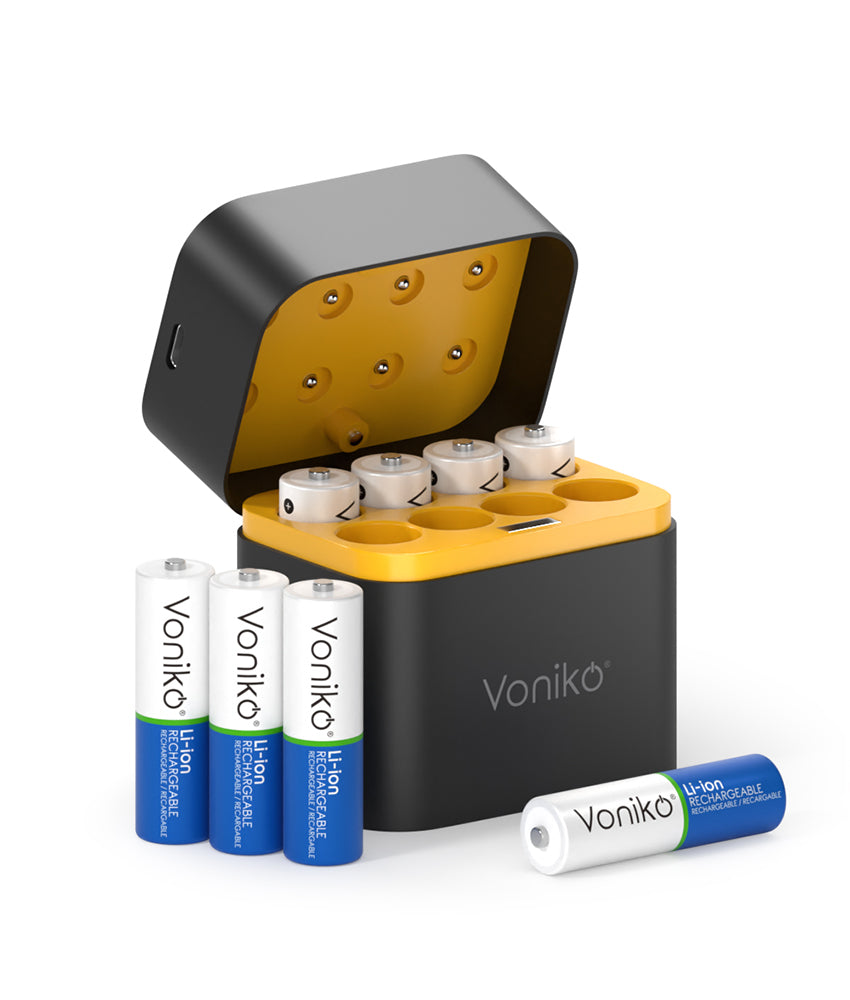
What sets coin cells apart from other battery types is their compact size and long shelf life. Most button cells have low self-discharge, holding their charge for a long time if not used. This makes them perfect for devices that sit idle for months or even years between uses. Button cells are usually disposable primary cells, but some are rechargeable secondary cells. At Voniko Batteries, we offer a wide range of both disposable and rechargeable options to meet different power needs.
Button Battery Types and Chemistries
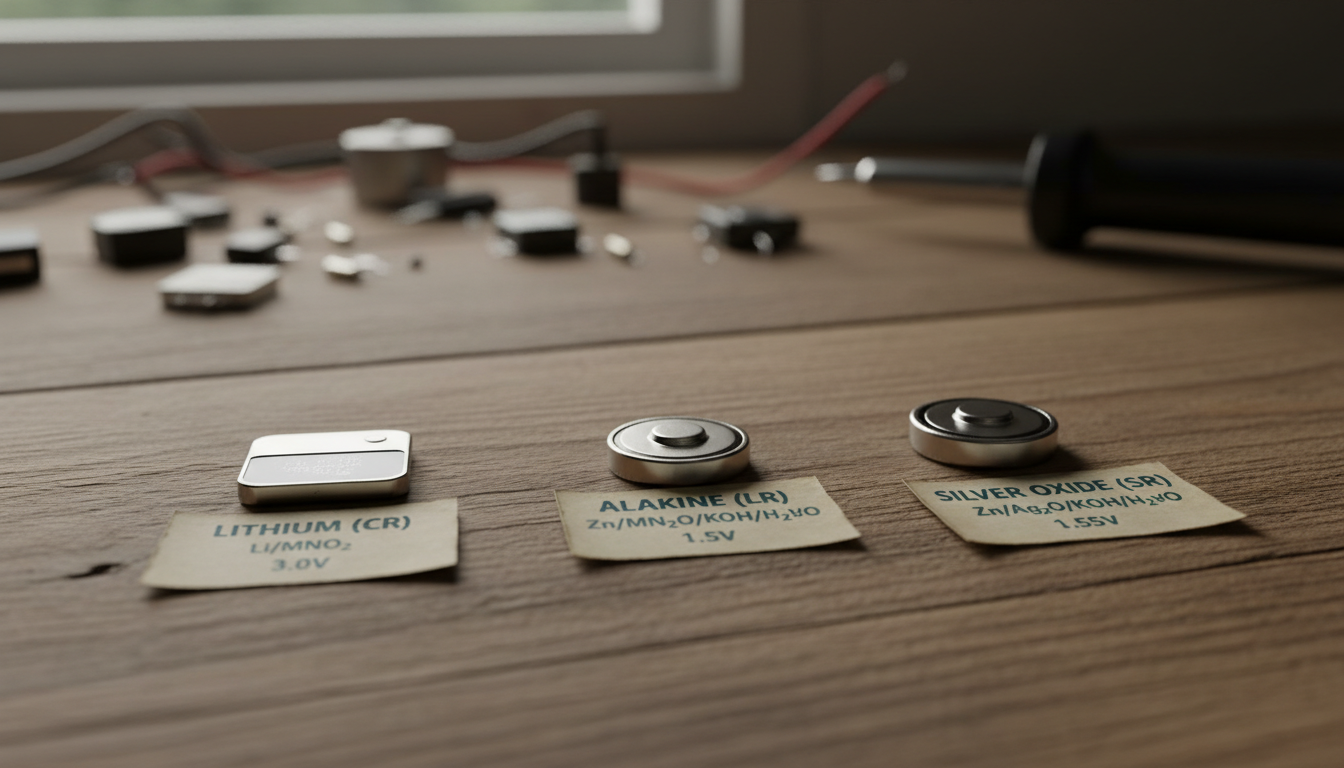
The chemistry inside a coin cell battery determines its voltage, lifespan, and best applications. Let's look at the main types you'll find on the market.
Lithium Coin Cell Batteries (CR/BR Series)
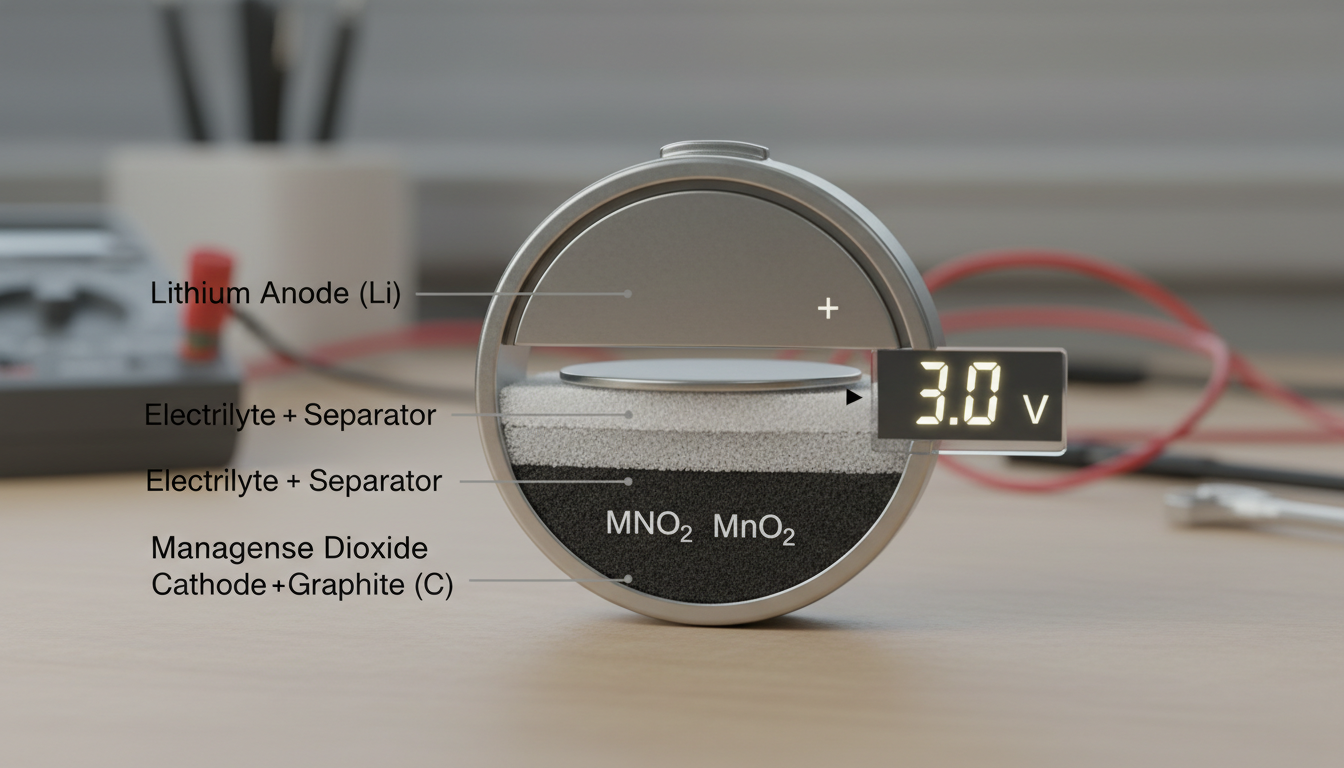
Lithium coin cell batteries have a nominal voltage of 3V. All coin cell lithium batteries consist of lithium manganese dioxide chemistries (Li-MnO2), which account for 80% of the lithium battery market. You'll recognize these by the "CR" prefix in their model names.
Lithium batteries offer some serious advantages. They deliver high energy density, meaning more power in a smaller package. They are resistant to temperature fluctuations and have a high energy density – up to 270 Wh/kg. They store energy even longer, up to 10 years. This makes them the go-to choice for devices like computer motherboards, car key fobs, and fitness trackers.
The "BR" series is another lithium variant. The "BR" prefix indicates a round lithium/carbon monofluoride cell. BR batteries perform especially well in memory backup applications and clock systems where you need stable, long-term power. Check out our full selection of lithium coin cells to find the right fit for your project.
Alkaline Coin Cell Batteries (LR Series)
Alkaline coin cell batteries have a nominal voltage of 1.5V. Alkaline coin cells all start with an "L", while lithium coin cells are all prefixed with a "C". These batteries are the budget-friendly option for low-drain devices.
Alkaline batteries (LR series) are widely used for low-drain devices like calculators and toys. They're cheaper but don't last as long as lithium cells. These put out 1.5 volts and are a budget-friendly option for devices that don't need high power. You'll find them powering small toys, LED flashlights, and basic calculators.
Alkaline batteries are made in the same button sizes as the other types, but typically provide less capacity and less stable voltage than more costly silver oxide or lithium cells. Their voltage drops gradually as they discharge, which can affect device performance toward the end of their life. Still, for everyday gadgets that don't demand consistent high voltage, alkaline coin cells get the job done at a fraction of the cost.
Silver Oxide Batteries (SR Series)
Silver oxide and zinc are respectively used as the main positive electrode and negative electrode active materials, and the operating voltage is stable during discharge. It has high energy density per unit volume and can attain higher capacities than those of alkaline button batteries. These batteries typically output 1.55V.
Silver oxide batteries stand out for their voltage stability. Silver cells may have an output voltage that is stable until it suddenly drops at end of life. This "cliff-edge" discharge characteristic makes them perfect for precision devices like analog watches, medical instruments, and camera light meters. Silver Oxide Batteries are preferred for watches and medical devices due to their stable voltage output and compact design.
Silver batteries are characterized by stable output voltage and flat discharge characteristics. The voltage at the terminals of the cell drops very quickly when it is discharged. This means you get consistent performance throughout the battery's life, then you know it's time for a replacement when performance suddenly drops.
Zinc-Air Batteries (P Series)
Miniature zinc-air batteries are button cells that use oxygen in air as a reactant and have very high capacity for their size. Each cell needs around 1 cm3 of air per minute at a 10 mA discharge rate. These cells are commonly used in hearing aids. They operate at about 1.2-1.4V.
The unique thing about zinc-air batteries is how they work. Zinc-air batteries use air as the depolarizer and have much higher capacity than other types, as they take that air from the atmosphere. This gives them incredible energy density for their size. However, a sealing tab keeps air out of the cell in storage; a few weeks after breaking the seal the electrolyte will dry out and the battery becomes unusable, regardless of use. Once you peel that protective tab off, the clock starts ticking.
How to Read Battery Nomenclature
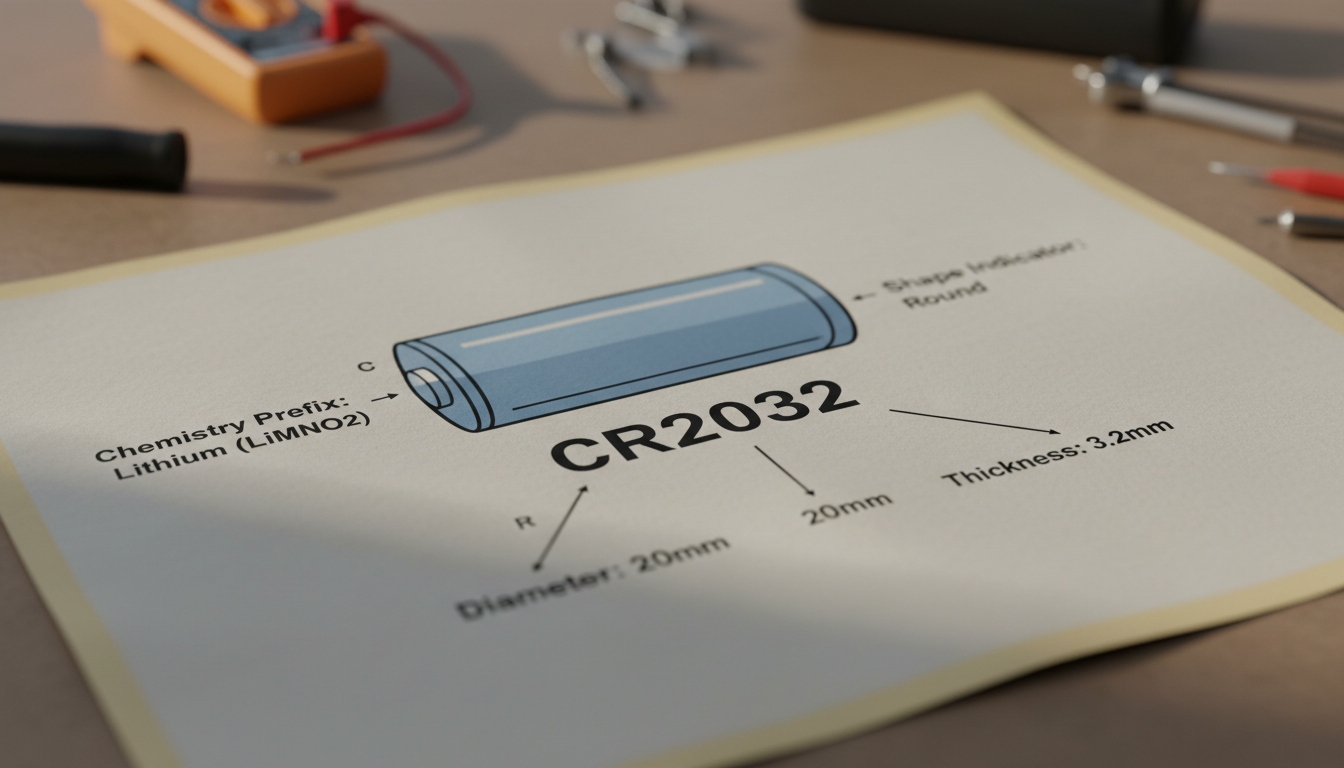
Those cryptic codes on coin cell batteries actually tell you everything you need to know. Let's decode them.
International standard IEC 60086-3 defines an alphanumeric coding system for "Watch batteries". Manufacturers often have their own naming system; for example, the cell called LR1154 by the IEC standard is named AG13, LR44, 357, A76, and other names by different manufacturers. Don't let the multiple names confuse you – they're often the same battery.
The naming system breaks down like this:
The first letter indicates cell chemistry. The letter 'L' is for Alkaline cells, while 'C' is prefixed for lithium coin cells. "S" stands for silver oxide, and "P" indicates zinc-air batteries.
The second letter indicates the cell shape. The letter 'R' is for round, 'F' is for flat, 'S' is for Square, and 'P' is for simply 'Not Round' cell. Since we're talking coin cells, you'll almost always see "R" for round.
The first one or two digits encode the outer diameter of the battery in whole millimeters, rounded down. Exact diameters are specified by the standard, and there is no ambiguity; e.g., any cell with an initial 9 is 9.5 mm in diameter, since no other value between 9.0 and 9.9 is used. The last two digits are the overall height in tenths of a millimeter.
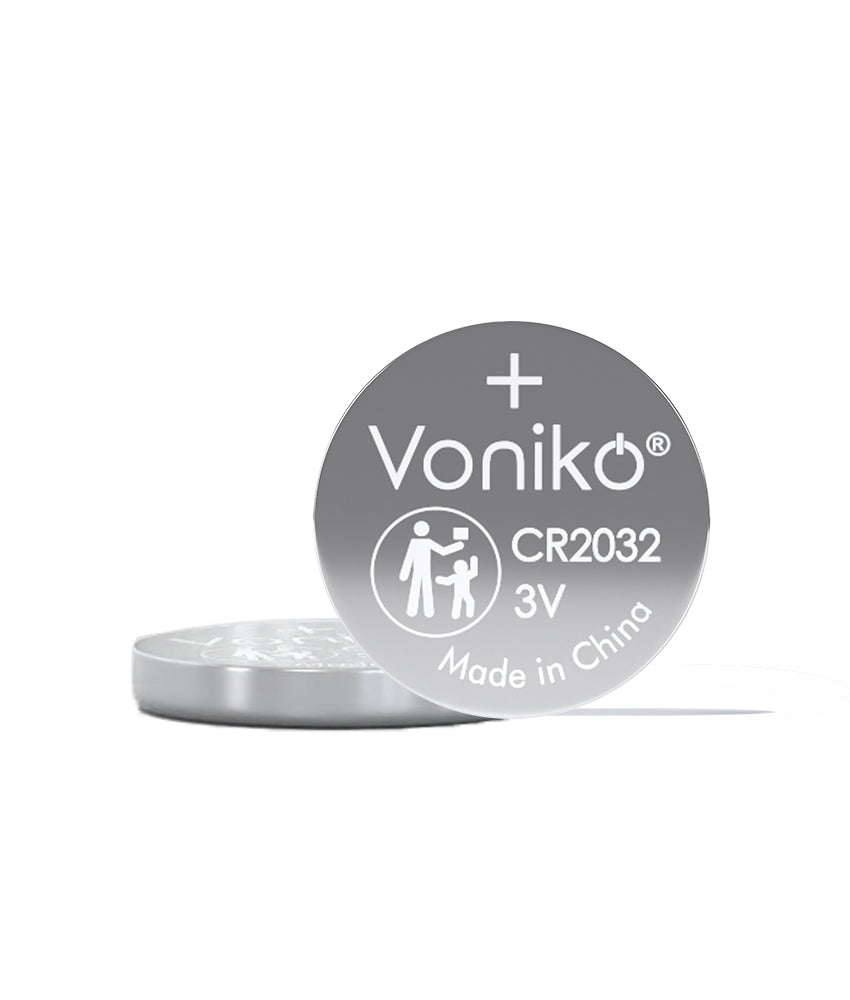
Let's use CR2032 as an example. The popular CR2032, for example, is a lithium battery (3V nominal voltage) measuring 20mm in diameter and 3.2mm tall. Break it down: "C" means lithium chemistry, "R" means round, "20" is 20mm diameter, and "32" is 3.2mm thick. Simple, right?
Common Coin Cell Battery Sizes
Coin cells come in dozens of sizes, but a handful dominate the market. Here's what you'll encounter most often:
| Battery Type | Diameter | Thickness | Voltage | Common Applications |
|---|---|---|---|---|
| CR2032 | 20mm | 3.2mm | 3V | Computer motherboards, key fobs, watches |
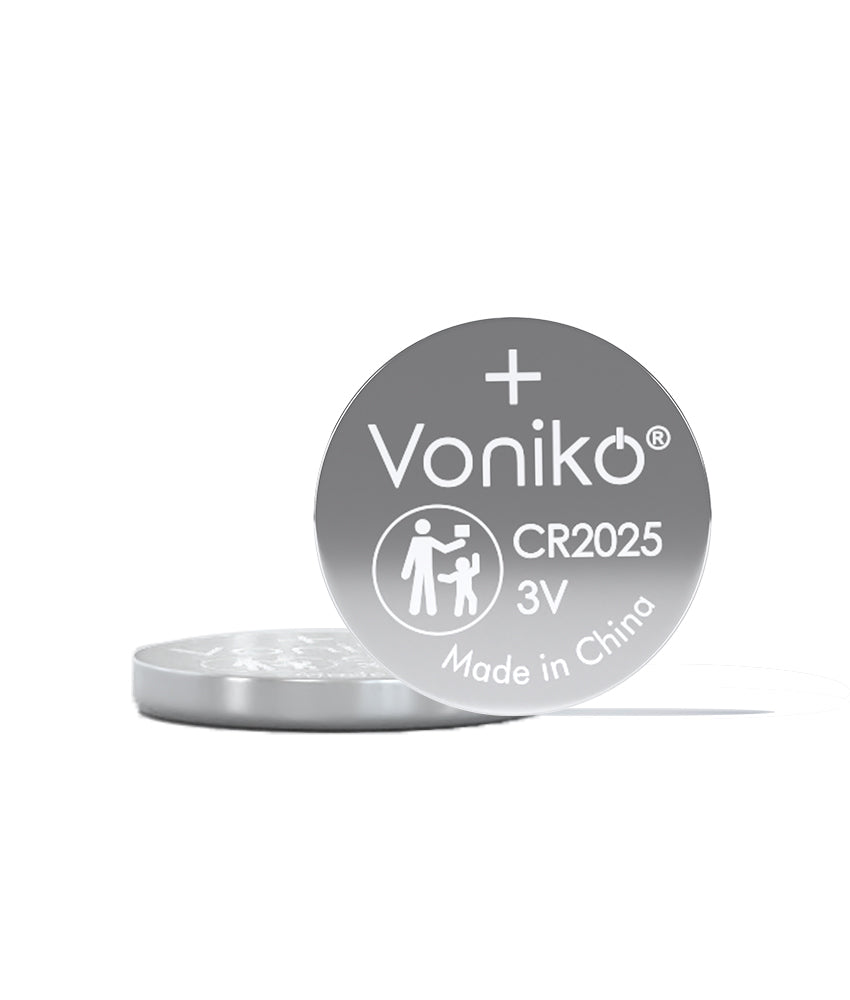
| CR2025 | 20mm | 2.5mm | 3V | Calculators, car remotes, medical devices |
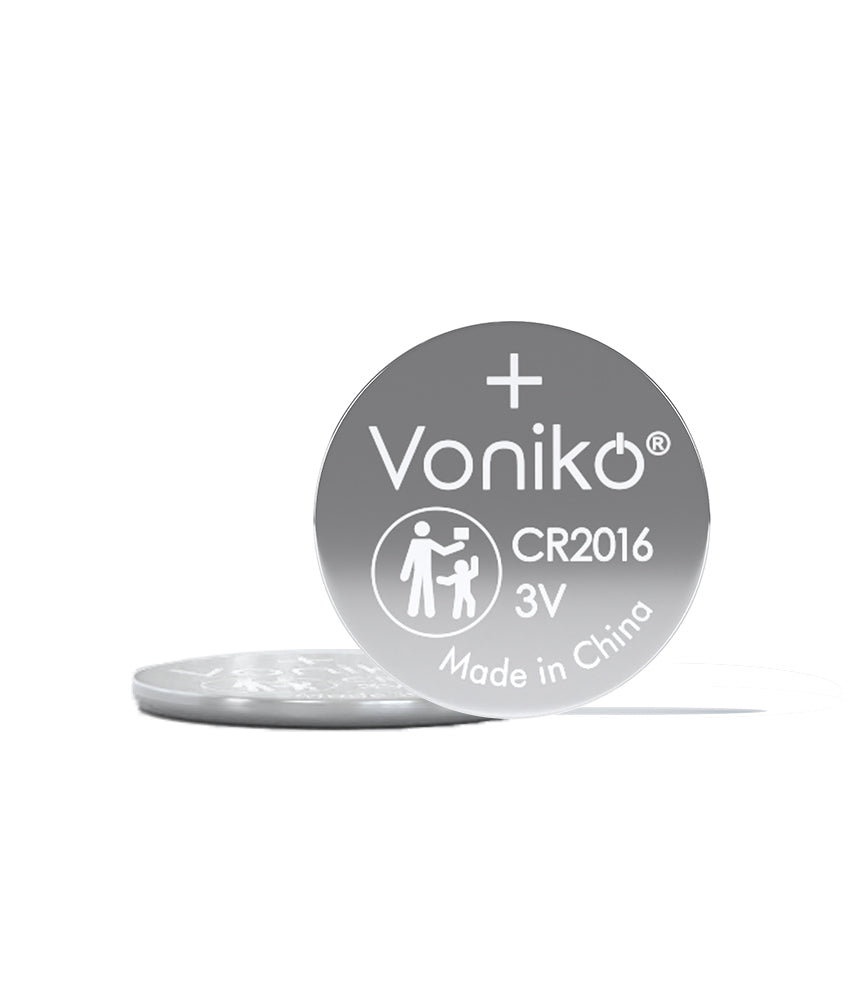
| CR2016 | 20mm | 1.6mm | 3V | Watches, small electronics |
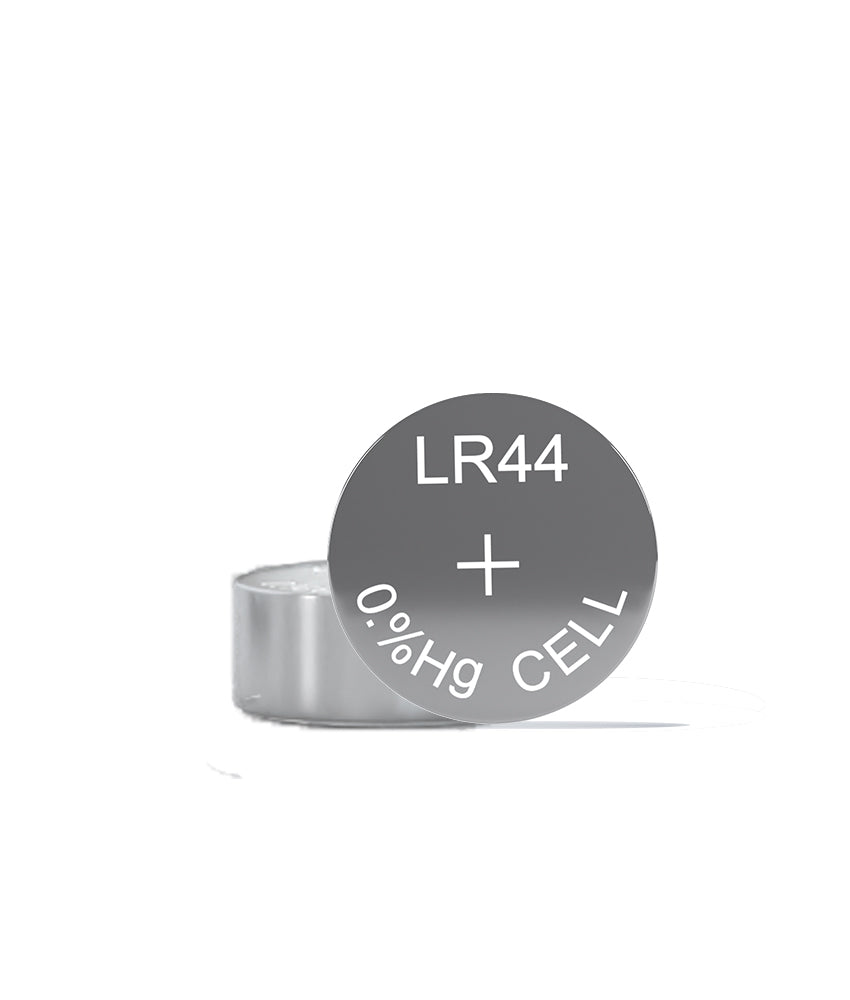
| LR44 (AG13) | 11.6mm | 5.4mm | 1.5V | Toys, laser pointers, calculators |
| SR44 | 11.6mm | 5.4mm | 1.55V | Watches, cameras, medical devices |
| CR2450 | 24mm | 5.0mm | 3V | Car key fobs, medical devices |
For example, CR2032 and CR2025 both have a 20mm diameter, but the CR2032 is thicker and has a higher capacity. This matters because the physical size of a coin battery determines whether it will fit in a specific device. Even small variations in diameter or thickness can cause compatibility issues, affecting device functionality.
The CR2032 lithium coin battery is the most commonly used, found in key fobs, calculators, medical devices, and fitness trackers. It has a 3V voltage and a 220mAh capacity, making it reliable for long-term use. It's basically the workhorse of the coin cell world.
For more detailed information on specific sizes and their uses, check out our comprehensive coin cell battery sizes guide where we break down dimensions and applications for every common type.
Rechargeable vs Non-Rechargeable Coin Cells
Button cells are usually disposable primary cells, but some are rechargeable secondary cells. Most coin cells you'll find are single-use, but rechargeable options exist for specific applications.
Rechargeable types made in the same case size will carry a different prefix not given in the IEC standard, for example some ML and LiR button cells use rechargeable lithium technology. Rechargeable batteries typically have the same dimension-based numeric code with different letters; thus CR2032 is a disposable battery while ML2032, VL2032 and LIR2032 are rechargeables that fit in the same holder if not fitted with solder tags.
Rechargeable button cells can be recharged and recycled about 300-1000 times after the power is low, with a life span of up to 10 years. They're perfect for devices with frequent battery replacements like some hearing aids, fitness trackers, and rechargeable car keys.
Non-rechargeable coin cells use chemistries like lithium, alkaline, or silver oxide, providing long shelf life and stable voltage, suitable for low-power, long-duration applications. Key differences include lifespan, capacity, cost, and environmental impact. While rechargeables cost more upfront, they pay for themselves if you're swapping batteries often.
Applications of Different Coin Cell Types
Different devices need different coin cell types based on their power requirements and operating conditions.
Consumer Electronics: Coin batteries play a pivotal role in powering compact consumer electronics. Their small size and high energy density make them ideal for devices like watches, remote controls, and fitness trackers. These button cell batteries ensure reliable performance and long-lasting power, even in space-constrained designs. CR2032 batteries dominate this space thanks to their high capacity and wide availability.
Medical Devices: Silver oxide coin cell batteries, valued for their stable voltage and suitability for precision devices like hearing aids and medical instruments, contribute to the diverse market landscape. The demand for reliable power sources in specialized applications sustains the market presence of silver oxide coin cell batteries. These devices can't tolerate voltage fluctuations, making SR-series batteries the clear choice.
Industrial and IoT Applications: In industrial settings, coin batteries are indispensable for IoT sensors, medical devices, and other specialized equipment. Their compact size and ability to operate under extreme conditions make them a preferred choice for these applications. Lithium batteries excel here due to their temperature tolerance and long shelf life.
Memory Backup: Computer motherboards and electronic devices use coin cells to maintain BIOS settings and real-time clocks. A typical use for a small rechargeable battery (in coin or other format) is to back up the settings of equipment which is normally permanently mains-powered, in the case of power failure. For example, many central heating controllers store operation times and similar information in volatile memory, lost in the case of power failure. It is usual for such systems to include a backup battery, either a disposable in a holder or a soldered-in rechargeable.
How to Choose the Right Coin Cell Battery
Choosing the right coin battery depends on the device and its power requirements. Here's what we recommend considering:
Check Your Device Specifications: Always start with what the manufacturer recommends. Cells of different chemical composition made in the same size are mechanically interchangeable. However, the composition can affect service life and voltage stability. Using the wrong cell may lead to short life or improper operation (for example, light metering on a camera requires a stable voltage, thus silver cells are usually specified).
Consider Your Usage Pattern: For devices you use daily, rechargeables might make sense. For emergency devices or things you rarely use, stick with primary cells. Energizer claims that their lithium coin cell batteries have up to 10 years of shelf life when properly stored. In actual use, it depends on the device. A CR2032 battery in a car key fob may last up to 4-5 years before needing replacement as the use of the battery is very intermittent, while a more active device such as the new Apple Air Tag which allows constant tracking of objects will only last about a year.
Think About Environment: If your device operates in extreme temperatures, lithium batteries are your best bet. For precision instruments, silver oxide batteries offer the stable voltage you need. For hearing aids where size and capacity matter most, zinc-air batteries are hard to beat.
Safety Considerations
Button batteries can pose a serious safety risk if they are ingested by young children or animals. The small size of button batteries makes them easy to swallow, and if they become lodged in the oesophagus, they can cause severe injury or even death. This isn't something to take lightly.
In the United States, on average, over 3,000 pediatric ingestions of button batteries are reported annually. The proportion of major and fatal outcomes is increasing. Coin cells of diameter 20 mm or greater cause the most serious injuries, even if expended and intact. Always store batteries out of reach of children and pets.
Button batteries can also cause a fire if they are not managed properly. When button batteries come into contact with metal objects, such as keys or coins, they can create a circuit and generate heat, which can cause the battery to rupture or ignite. Store loose batteries in their original packaging or in a non-conductive container.
FAQs
Can I use a CR2025 instead of a CR2032?
In some cases, yes, but it depends on the device. Both batteries have the same 20mm diameter, but the CR2025 is thinner (2.5mm) and has a lower capacity (~170mAh) compared to the CR2032 (3.2mm, ~220mAh). If your battery compartment allows a thinner battery, a CR2025 might work but won't last as long. Always check your device manual first.
What's the difference between CR and LR batteries?
CR batteries are lithium batteries and provide 3 volts, while LR batteries are usually alkaline batteries and provide 1.5 volts. Lithium batteries generally provide longer life and more stable voltage output, suitable for devices that require longer use time or higher voltage. You can't swap one for the other since the voltage differs.
How long do coin cell batteries last in storage?
Lithium coin cells can last up to 10 years in storage when kept in cool, dry conditions. Alkaline batteries typically last 5-7 years. The lifespan of coin cells varies depending on usage and the specific type. Generally, they can last between 3 to 10 years in storage, with lithium coin cells often having the longest lifespan.
Are coin cell batteries recyclable?
Yes, coin cell batteries should be recycled. Many contain heavy metals that shouldn't go in regular trash. Most hardware stores and electronics retailers have battery recycling programs. Check with your local waste management facility for proper disposal options.
Why do some batteries have multiple names like LR44, AG13, and A76?
Different manufacturers use their own naming conventions for marketing purposes, but the batteries are often identical in specifications. The IEC standard name would be LR1154, but you'll see it sold as LR44, AG13, A76, and other names depending on the brand. Always check the physical dimensions and voltage to confirm compatibility.